How far is Ayodhya from Delhi, and what is the best route?
Ayodhya is about 690 km from Delhi, a drive of 10–11 hours on the recommended route via the Yamuna Expressway and the Agra–Lucknow Expressway. The road passes Mathura, Agra, Lucknow and Barabanki, which is why many devotees turn the trip into a 3–4 day yatra that also covers Vrindavan and Mathura.
| Route | Via | Distance | Travel time | Best for |
|---|---|---|---|---|
| Route 1 (recommended) | Yamuna Expressway → Agra → Agra–Lucknow Expressway → Lucknow → Ayodhya | ~690 km | 10 hr 30 min | Fastest, smoothest expressway journey |
| Route 2 (via Mathura–Vrindavan) | Yamuna Expressway → Mathura darshan → Agra → Ayodhya | ~710 km | 12 hr | Krishna Janmabhoomi and Ram Janmabhoomi in one yatra |
| Route 3 (NH-19 + NH-27) | Old Mathura Road → Agra → Kanpur → Lucknow → Ayodhya | ~720 km | 12–13 hr | Local stops, traditional dhaba route |
The Agra–Lucknow Expressway is one of India's longest and best-maintained expressways — six lanes, access-controlled, with clean food courts and little traffic. Together with the Yamuna Expressway it gives you roughly 500 km of premium highway. Even so, 10–11 hours is a long day, so we strongly recommend one night in Ayodhya or Lucknow rather than a same-day return.
What are the main places to visit in Ayodhya?
Ayodhya's sacred history stretches back some 5,000 years. The city is mentioned in the Atharvaveda, the Ramayana and the Yoga Vasistha, and it is one of the seven Saptpuri cities of Hinduism.
Shri Ram Janmabhoomi Mandir
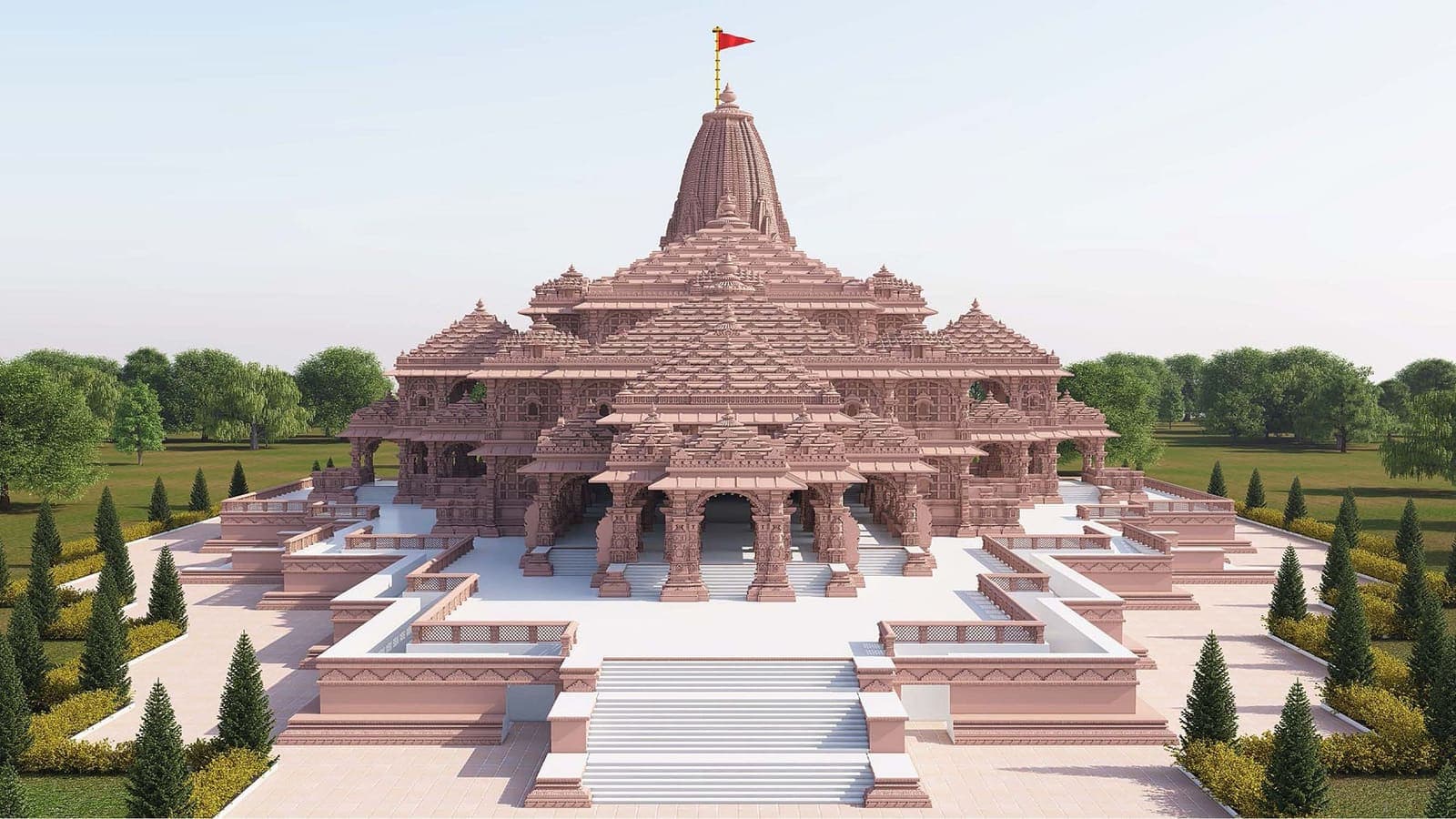
The Ram Mandir opened to devotees in January 2024 after the historic Pran Pratishtha ceremony. The 70-acre complex is built in Nagara style from pink Rajasthani sandstone, and the main sanctum houses the Ram Lalla Virajman deity. Darshan is free, but passes should be obtained in advance from the official Ram Janmabhoomi Trust website, or at the counter subject to availability. Weekdays are less crowded than weekends, and the 6:30 AM mangala aarti and 7:00 PM sandhya aarti are the most special times to visit. Mobile phones, cameras and bags are not allowed inside; cloak rooms are available outside.
Hanuman Garhi
This 18th-century hilltop temple to Lord Hanuman is reached by 76 steps. By tradition, devotees visit here before the Ram Mandir. Don't miss the besan ladoo prasad or the view over the city from the top.
Kanak Bhawan
Legend says Queen Kaikeyi gave this palace to Sita as a wedding gift. The present temple, rebuilt in 1891 in a Bundelkhand-Rajput style, has gold-crowned idols of Ram and Sita and a beautiful daily aarti.
Nageshwarnath Temple
Tradition holds that Kush, Lord Ram's son, built this Shiva temple and that it is the only temple from ancient Ayodhya to survive through the centuries. Naga Panchami is celebrated here with great fervour.
Saryu Ghat and Ram Ki Paidi
Ram Ki Paidi is a chain of bathing ghats on the sacred Saryu where devotees take a holy dip. The Saryu Aarti at sunset, around 6 PM, sets countless diyas floating on the river — most spectacularly during Deepotsav.
Treta Ke Thakur
This 17th-century temple marks the spot where Lord Ram is believed to have performed the Ashwamedha Yagna after returning from Lanka. It opens for darshan only once a year, on the Ekadashi of Kartika month.
Guptar Ghat and Choti Chhawni
Guptar Ghat is where Lord Ram is believed to have entered the Saryu to return to Vaikuntha; the Ram Janaki Temple and the Charan Paduka shrine stand here. Nearby Choti Chhawni is a striking marble temple complex of the Nirvani Akhada.
More sites worth adding
- Tulsi Smarak Bhavan, dedicated to Goswami Tulsidas, author of the Ramcharitmanas
- Ram Katha Sangrahalaya, a museum of Ramayana artefacts and manuscripts
- Sita Ki Rasoi, the legendary kitchen of Sita Mata, now a small temple
- Bharat Kund in Nandigram, 15 km from Ayodhya, where Bharat ruled for 14 years awaiting Ram's return
- Mani Parbat, Sugriv Parbat and Dashrath Bhawan
What is a good 2-day Delhi–Ayodhya–Delhi itinerary?
Day 1 — Delhi to Ram Mandir Ayodhya cab ride
- 5:30 AM — pickup from your Delhi address
- 6:00 AM — onto the Yamuna Expressway, with breakfast near Mathura
- 11:00 AM — tea or coffee at an Agra–Lucknow Expressway rest area
- 2:00 PM — lunch near Lucknow
- 4:30 PM — reach Ayodhya and check in near Ram Path
- 6:00 PM — Saryu Aarti at Ram Ki Paidi
- 8:00 PM — dinner and overnight stay
Day 2 — Darshan and return
- 5:00 AM — morning darshan at Hanuman Garhi
- 6:30 AM — Shri Ram Janmabhoomi Mandir darshan
- 9:00 AM — breakfast, Kanak Bhawan and Nageshwarnath Temple
- 11:00 AM — Guptar Ghat and Choti Chhawni
- 12:30 PM — Tulsi Smarak Bhavan and lunch
- 2:00 PM — depart Ayodhya for Delhi
- 12:30 AM — arrive home in Delhi
Planning a longer pilgrimage? We run Delhi–Mathura–Vrindavan–Ayodhya–Delhi over 3 days (from ₹22,000), Delhi–Ayodhya–Varanasi–Delhi over 4 days (from ₹32,000) and Delhi–Ayodhya–Prayagraj–Varanasi–Delhi over 5 days (from ₹42,000). Starting with Krishna's towns? See our Delhi to Vrindavan taxi page.
When is the best time to visit Ayodhya?
October to March, when temperatures sit around 10–28°C. UP summers in May and June can cross 45°C, which makes long darshan queues hard going. Plan around the city's big days:
- Ram Navami (March/April): Lord Ram's birthday and Ayodhya's biggest festival, with all-night darshan and massive crowds.
- Deepotsav (October/November, around Diwali): the Saryu is illuminated with over a million lamps — a Guinness World Record-breaking spectacle and the most photographed day of the year.
- Janmashtami (August/September): celebrated grandly across the major temples.
- Sawan and Kartik Purnima: devotees take a holy dip in the Saryu.
- 22 January: anniversary of the Ram Mandir Pran Pratishtha.
Travel tips for a Delhi to Ayodhya one way taxi or yatra
- Book your darshan pass early on srjbtkshetra.org or the official app — free passes go fast, especially at weekends.
- Carry original ID (Aadhaar, voter ID or passport); it is required at the Ram Mandir entry.
- Bring a small lock for the cloak room, since phones, cameras and bags must stay outside.
- Dress modestly, covering shoulders and knees; traditional Indian wear is preferred.
- Wear socks or easy footwear — shoes come off many times, and the marble gets hot in summer.
- Keep small change for offerings, e-rickshaws and prasad shops.
- Pre-book your hotel. Accommodation is limited; staying near Ram Path keeps darshan walks short, and we can help you book.
- Travelling with elders or a wheelchair user? Ask for front-seat preference, more frequent rest breaks and a lift-friendly hotel near Ram Path. The Ram Mandir itself is wheelchair-accessible.
- Extend the yatra: Varanasi (200 km from Ayodhya), Prayagraj (170 km) and Naimisharanya (170 km) make good additions for a 4–5 day circuit.
- Taste the local food: an Awadhi vegetarian thali, hot kachori-sabzi for breakfast and chura matar in winter.
- Do not drive back in one stretch. A 10-hour return through the night is tiring, so build in a night's rest.