How far is Lucknow from Delhi by road, and which route is fastest?
Lucknow is about 505 km from Delhi via the Yamuna Expressway and the Agra–Lucknow Expressway, and the drive takes 7–8 hours including two short breaks. Your driver chooses between three routes based on your pickup point in Delhi NCR and any stopovers you want.
| Route | Via | Distance | Travel time | Best for |
|---|---|---|---|---|
| Route 1 (recommended) | Yamuna Expressway → Agra → Agra–Lucknow Expressway → Lucknow | ~505 km | 7 hr 30 min | Fastest, smoothest expressway journey |
| Route 2 (NH-19 + NH-27) | Old Mathura Road → Mathura → Agra → Kanpur → Lucknow | ~525 km | 9 hr | Local stops and traditional dhabas |
| Route 3 (heritage circuit) | Yamuna Expressway → Mathura → Vrindavan → Agra → Lucknow | ~535 km | 9 hr 30 min | Braj temple darshan on the way to Lucknow |
The Agra–Lucknow Expressway is one of India's finest highways: a 6-lane, access-controlled corridor with well-spaced rest areas, clean restrooms, food courts and fuel stations. Combined with the Yamuna Expressway, it gives you over 460 km of premium driving.
What are the best places to visit in Lucknow?
The City of Nawabs is known for poetry, etiquette and Mughlai elegance, with 18th-century Nawabi monuments standing alongside modern parks and busy markets.
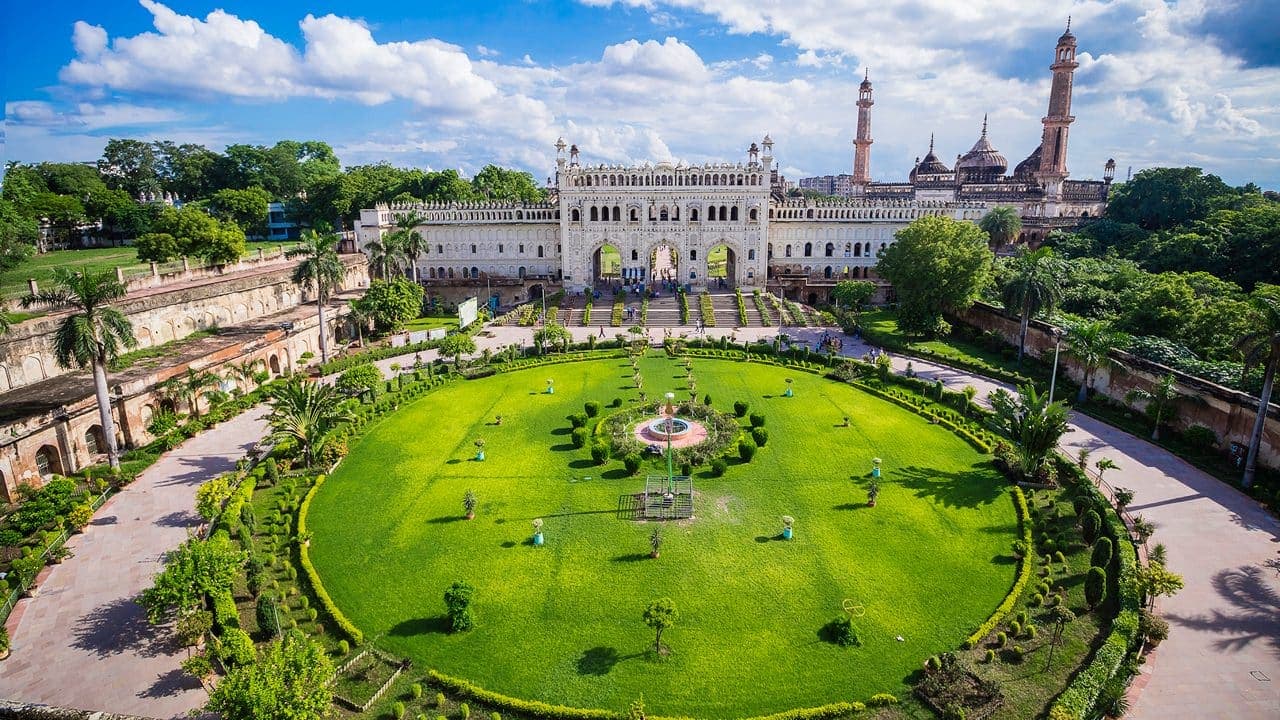
Bara Imambara
Nawab Asaf-ud-Daula built it in 1784. Its main hall, about 50 m long and 15 m high, is one of the largest arched halls in the world and has no supporting pillars or beams. The complex also holds the Bhul Bhulaiya maze of 489 identical doorways, the Asfi Mosque and a step-well. Allow 2–3 hours, arrive at the 9 AM opening, and hire a government-authorised guide — the maze is genuinely confusing.
Chota Imambara
Also called the Hussainabad Imambara or the Palace of Lights, it was built in 1838 by Nawab Muhammad Ali Shah. Inside are white-and-gold walls, ornate calligraphy and old Belgian chandeliers that blaze during Muharram, with Persian-style gardens outside and the Hussainabad Clock Tower and Picture Gallery next door.
Rumi Darwaza
The 60-foot "Turkish Gate", built in 1784 as part of a famine relief programme, is the city's most recognised landmark. It stands between the two Imambaras, so it is an easy walk, and it photographs best at golden hour.
Hazratganj
Lucknow's main shopping and dining district dates from the British era, with Victorian facades, a walkable main lane, bookshops, old tea houses and the iconic Royal Cafe. It is made for an evening stroll.
British Residency
These atmospheric ruins still carry cannonball marks and bullet holes from the five-month siege of 1857. There is a small museum, an 1857 cemetery and quiet gardens — and far fewer crowds than at the Imambaras.
Janeshwar Mishra Park and Ambedkar Memorial Park
Janeshwar Mishra Park spreads over 376 acres in Gomti Nagar, with a 2-km lake, bicycle hire and zones for yoga, children and seniors; it is billed as Asia's largest urban park. The 107-acre Ambedkar Memorial Park, completed in 2008, is a red sandstone complex of stupas, bronze elephants and columns that is most impressive when lit at night.
Other sites
- Dilkusha Kothi and Sikandar Bagh, both linked to the events of 1857
- Jama Masjid and Tila Wali Masjid
- Lucknow Zoo (Nawab Wajid Ali Shah Zoological Garden), good for families with children
- Begum Hazrat Mahal Park and Constantia (La Martiniere College)
- Chandrika Devi Temple, about 25 km outside the city
Where should you eat Awadhi food in Lucknow?
- Tunday Kababi (Aminabad and Chowk) — the legendary galouti kebabs that dissolve rather than need chewing
- Idris ki Biryani (Raja Bazaar), plus Wahid and Lalla — classic Lucknowi biryani
- Royal Cafe (Hazratganj) — basket chaat and ice cream
- Prakash Kulfi (Aminabad) — rabri-falooda kulfi that is worth the queue
- Chowk — saffron lassi in kulhads, malai paan and, in winter only, nimish
For chikan embroidery, shop at Chowk and Janpath Market or at SEWA, Adabi and Chikan Kalpana; mall versions are often machine-made.
What does a 2-day Delhi–Lucknow–Delhi trip look like?
Day 1 — Delhi to Lucknow
- 6:00 AM — pickup from your Delhi address
- 6:30 AM — Yamuna Expressway, with breakfast near Mathura
- 11:00 AM — tea or coffee at an Agra–Lucknow Expressway rest area
- 1:30 PM — lunch near Kanpur
- 3:30 PM — reach Lucknow and check in
- 5:00 PM — Bara Imambara, Rumi Darwaza and Chota Imambara at sunset
- 8:00 PM — dinner at Tunday Kababi or Idris ki Biryani
- 9:30 PM — Hazratganj evening stroll
Day 2 — Sightseeing and return
- 8:00 AM — British Residency
- 10:00 AM — Janeshwar Mishra Park or Ambedkar Park
- 12:00 PM — chikan shopping in Chowk and lunch
- 2:00 PM — depart for Delhi
- 10:00 PM — arrive home
Adding Ram Mandir darshan? Ayodhya is about 135 km from Lucknow — see our Delhi to Ayodhya taxi page for routes and fares.
Which festivals are worth timing a Lucknow trip around?
The cool months from October to March are the most comfortable for sightseeing, and several of the city's best events fall in or near them:
- Lucknow Mahotsav (November–December): a 10-day celebration of Awadhi food, mushaira poetry, classical music, kathak and folk crafts.
- Kathak Mahotsav (February): Lucknow is home to a kathak gharana, with performances at Bhatkhande University.
- Muharram (date varies): the Imambaras fill with devotees and traditional processions — rich in culture, but solemn.
- Eid-ul-Fitr and Eid-ul-Adha: biryani, sheermal, kebabs and sweets everywhere.
- Holi and Diwali: traditional celebrations and cultural events around Hazratganj.
Travel tips for your Lucknow trip
- Leave Delhi by 6 AM to reach Lucknow by 3–4 PM with time for an Imambara sunset.
- Stay in Hazratganj or Gomti Nagar — central, safe and close to most sights and restaurants. We can recommend hotels.
- Hire a guide at Bara Imambara; the Bhul Bhulaiya is almost impossible to navigate alone.
- Dress conservatively at the Imambaras, covering shoulders and knees; a head covering is appreciated.
- Eat in the right order: galouti kebab at Tunday's for lunch, biryani at Idris for dinner, then paan in Hazratganj.
- Carry cash for small shops, autos and chaat stalls; bigger restaurants take UPI and cards.
- Learn a little Awadhi courtesy — a polite "pehle aap" goes a long way with locals.
- Drive back rested. 505 km straight after a tiring day of sightseeing is hard, which is why the 2-day plan works best.